RSS

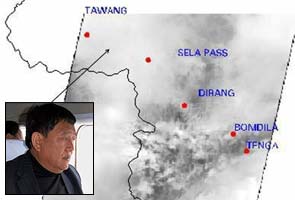
Wreckage of Arunachal Chief Minister's Chopper, three bodies found: Sources

Reports are coming in that the missing Arunachal Chief Minister Dorjee Khandu has been found dead; the site where his helicopter crashed has also been identified. However, there has been no official confirmation so far.

Continue reading...

U.S. Navy ships in Red Sea move close to Egypt as precaution

0 comments

US_Navy_091006-N-5345W-020_he_amphibious_assault_ship_USS_Bataan_(LHD_5)_transits_through_the_Red_Sea_with_the_amphibious_transport_dock_USS_Ponce_(LPD_15)Two U.S. Navy ships patrolling in the Middle East moved closer to Egypt's Red Sea coast in recent days, the top Marine Corps general said on Thursday, in what appeared to be a precautionary move after the military overthrow of President Mohamed Mursi.


The United States often sends Navy vessels close to countries in turmoil in case it needs to protect or evacuate U.S. citizens or take part in humanitarian assistance. Their presence does not necessarily mean the United States is preparing to carry out military action.


"Egypt is (in) a crisis right now," Marine Corps Commandant General James Amos told the Center for Strategic and International Studies think tank. "When that happens, what we owe the senior leadership of our nation are some options," Amos said. He did not say what the options were.


U.S. Navy and Marine Corp officials said the two ships, part of a three-ship amphibious readiness group, had been in the region since May, patrolling the Red Sea, Horn of Africa, the Gulf and the Arabian Sea, and that there were no new orders to prepare for a possible conflict in Egypt.


Washington has walked a careful line, neither welcoming Mursi's removal last week nor denouncing it as a "coup." U.S. defense officials on Wednesday said they still planned to send four F-16 fighter jets to the Egyptian government as planned in coming weeks.


Amos said the USS San Antonio, an amphibious transport dock, and the USS Kearsarge, an amphibious assault ship, had moved further north in the Red Sea two or three nights ago to better respond if needed.


U.S. Marine Corps officials said moving amphibious ships closer to shore would enable easier movement of helicopters and other equipment, if it were needed.


"Why? Because we don't know what's going to happen," he said.


Navy officials said the third ship in the group, the USS Carter Hall, remained off the coast of Bahrain in the Gulf.

Continue Reading... Labels:


Egypt opposition rejects poll plan

0 comments

_68631226_68631225The main liberal opposition coalition in Egypt has rejected interim leader Adly Mansour's decree, which sets a new poll timetable to stop the unrest.


The National Salvation Front (NSF) demanded more changes and consultation on the document.


Both the Muslim Brotherhood, which supports ousted Islamist President Mohammed Morsi, and the Tamarod protest movement earlier rejected the decree.


The Mansour plan also envisages changes to the Islamist-drafted constitution.


In other developments on Tuesday:


  • Mr Mansour named ex-Finance Minister Hazem el-Beblawi as new Prime Minister

  • in turn, Mr el-Beblawi pledged to give cabinet posts to Muslim Brotherhood members - an offer immediately rejected by Mohamed Kamal, senior member of the Brotherhood's political wing, the Freedom and Justice Party (FJP)

  • Defence Minister Abdel-Fattah el-Sisi warned against any attempts to disrupt the country's "difficult" transition

  • two people were killed when suspected Islamists attacked a security checkpoint in the Sinai province


Egypt has been in turmoil since the democratically-elected Mr Morsi was overthrown by the army last week, with protesters both for and against the ousted president massing on the streets.


On Monday, at least 51 people - mostly pro-Morsi supporters from his Muslim Brotherhood movement - were killed outside the barracks where he is thought to be held.


'Putchist' decree


"The National Salvation Front announces its rejection of the constitutional decree," the liberal opposition said in a statement.


The NSF said it was not consulted on the document vital to Egypt's political transition, demanding changes to the proposal.


The coalition - which was led by Mohamed ElBaradei until his appointment as Egypt's deputy president - did not elaborate further.


The Muslim Brotherhood - which is pressing for the immediate reinstatement of Mr Morsi - earlier also rejected the decree.


Essam al-Erian, deputy chairman of the FJP, said the document was "a constitutional decree by a man appointed by putchists".


Even the Tamarod movement - which led the anti-Morsi protests - said it had not been consulted on the election plan, asking to see the interim leader to discuss the situation.


Mr Mansour's decree, issued late on Monday, laid out plans to set up a panel to amend the suspended Islamist-drafted constitution within 15 days.


The changes would then be put to a referendum - to be organised within four months - which would pave the way for parliamentary elections, possibly in early 2014.


Once the new parliament convenes, elections would be called to appoint a new president.


Army warning


Earlier on Tuesday, Mr Sisi said warned in a televised speech that the "future of the nation is too important and sacred for manoeuvres or hindrance, whatever the justifications".


He said that neither the army nor the people of Egypt would accept "the stalling or disruption" of this "difficult and complex" period.


According to the BBC's Wyre Davies, in Cairo, emotions are still raw and compromise is a word many people are not ready to use.


Mr Morsi's removal last Wednesday followed days of mass protests by people who accused him of becoming increasingly authoritarian, pursuing an Islamist agenda, and failing to tackle Egypt's economic woes.


The army's moves were welcomed by some Gulf states, and two - the United Arab Emirates and Saudi Arabia - have made major pledges of financial help in a show of support for the new administration.


But other nations were strongly against the army's actions - perhaps the most vocal of which was Turkey.


In the aftermath of the ousting of Mr Morsi, Turkish Foreign Minister Ahmet Davutoglu said: "It is unacceptable for a government, which has come to power through democratic elections, to be toppled through illicit means and, even more, a military coup."

Continue Reading... Labels:


Syrian rebels 'can fight in Lebanon'

0 comments

_67983049_67983048The military chief of the main umbrella group of Syrian rebels says his men should be allowed to fight Hezbollah militants inside neighbouring Lebanon.


Gen Selim Idriss of the Free Syrian Army told the BBC that Hezbollah fighters were "invading" Syria and Lebanon was doing nothing to stop them.


Gen Idriss denied rebels were losing the war, despite recent setbacks.


Early on Wednesday Syrian state TV claimed that government forces had gained full control of Qusair.


There was no way of immediately verifying the report.


Gen Idriss also said they would not accept any role for President Bashar al-Assad in a post-conflict Syria.


"If the price of peace is that Bashar still has the power in Syria, we don't need that kind of peace," he said.


He said he had told commanders, including those near the strategic town of Qusair, to fight Hezbollah militants "just inside Syria".


But he added: "There are now a very large number of Hezbollah fighters in Syria, in Qusair, in Idlib, in Aleppo, in Damascus and I can say everywhere in the country.


"Hezbollah fighters are invading Syrian territory. And when they continue to do that and the Lebanese authorities don't take any action to stop them coming to Syria, I think we are allowed to fight Hezbollah fighters inside [Lebanese] territory."


Pro-government forces including Hezbollah fighters have been battling rebels for control of Qusair in recent days.


The town lies just 10km (six miles) over the Lebanese border.


"Our heroic armed forces have returned security and stability to all of the town of Qusair," said Syrian state TV early on Wednesday.


Gen Idriss said he was sure the rebels would win the fight against Mr Assad.


"But without the support from our friends in Western countries and the USA the fight will continue for many, many years and there will be more martyrs, more destruction," he said.


In that scenario, extremists would win more support within rebel ranks, he added.


More than 80,000 people have been been killed in Syria and more than 1.5 million have fled the country since an uprising against Mr Assad began in 2011, according to UN estimates.

Continue Reading... Labels: ,


Syria opposition opens key talks in Istanbul

0 comments

_67783719_1d109fbc-0749-4b2f-829e-23897787d6edThe outgoing leader of Syria's main opposition coalition Moaz al-Khatib has put forward a detailed plan for the transition of power.


Mr Khatib's proposal comes as opposition delegates begin three days of key talks in Istanbul.


The proposal stipulates that President Bashar al-Assad must leave office, a demand likely to be rejected by Mr Assad and his key backer, Russia.


The UN estimates at least 80,000 people have died in the uprising so far.


Mr Khatib's proposal calls for Mr Assad and his family to be given a safe exit if he stands down.


The Syrian president would have 20 days to accept the offer, under the terms of the initiative, which would then allow Mr Assad a further month to hand over power to his prime minister or vice president.


Mr Khatib was elected head of the National Coalition in November 2012 but is shortly to step down, having resigned in March.


However, Mr Assad has made clear that he has no intention of standing down, and indeed plans to stand in presidential elections in June 2014, the BBC's Jim Muir reports from Beirut.


With Mr Assad's forces currently making some gains on the ground, he is clearly in no mood to concede defeat by what he regards as a foreign-backed conspiracy, our correspondent says.


Watch Video:


The Syrian government, backed by Russia, has said it will not accept any preconditions for talks. However, the opposition leadership, largely made up of exiles, risks losing what little credibility it has inside Syria if they abandon the demand for Mr Assad to step down, he adds.


Hezbollah involvement


The talks in Istanbul are aimed at revamping the own membership and leadership of the National Coalition for Syrian Revolutionary and Opposition Forces.


They come amid intensifying diplomatic manoeuvres to try to bring about an end to the conflict.


Also on Thursday, further reports emerged about the involvement of the Lebanese Shia militia Hezbollah in the conflict on the side of the regime.


A source close to Hezbollah told the AFP news agency that 75 fighters had died in Syria since late last year.


The UK-based activist group the Syria Observatory for Human Rights (SOHR) puts the figure of dead Hezbollah fighters even higher, at 104.


There have been reports of Hezbollah's involvement in the conflict for months but the militia has recently admitted sending fighters for the first time, in fighting over the key strategic town of Qusair.


The Local Co-ordination Committees, a network of activists in Syria, said 53 people had died in violence in Syria on Thursday.

Continue Reading... Labels: ,


Kuwait makes small steps to connect with youth

0 comments

Kuwait Minister for Cabinet and Municipal Affairs Sheikh Mohammad speaks in his office in Kuwait CityOn a January afternoon in Kuwait City, a group of bloggers gathered around three men they would not normally expect to see in a downtown coffee shop, clutching lattes and mochas.


Education Minister Nayef al-Hajraf, Commerce and Industry Minister Anas al-Saleh and Sheikh Mohammad al-Mubarak al-Sabah, all in their early 40s, had come for an informal meeting with some 30 Kuwaiti bloggers and online journalists to discuss issues that concern young people.


"It was an ice-breaking action," Sheikh Mohammad, a member of the ruling family who is Kuwait's minister for cabinet and municipal affairs, told Reuters.


"We wanted them to hear what we had to say. We wanted to hear what they had to say," he said in the April interview.


Like most countries in the Gulf region, Kuwait has seen little of the kind of turmoil that turfed out entrenched rulers in other Arab countries in 2011. But opposition politicians and a youth movement have been emboldened.


Dozens of activists and political figures have been charged since late last year with insulting 83-year-old ruler Sheikh Sabah al-Ahmad al-Sabah, mainly in comments made online.


Young people regularly spill out onto the street to protest over local issues. Most of the gatherings are peaceful, but some have resulted in clashes with police.


In an attempt to prepare for the future of a country where more than half of citizens are under 25, Kuwait has tasked the three men and other younger officials with exploring reform. With little desire to substantively change the political structure - the Al-Sabah family has ruled Kuwait for 250 years - the men are focusing their efforts on the economy.


Their concerns about Kuwait's economic future give them common ground with many activists, a Kuwait-based diplomat said.


"They understand the difficulties and the realities of the situation here," the diplomat said. "But they face huge hurdles."


THEY GET IT


A major oil producer and U.S. ally, Kuwait is one of the world's richest countries per capita and one of the most politically free in the Gulf, but development has stalled due to bureaucracy and political upheaval - December's parliamentary election was the fifth since 2006.


The economy is almost entirely dependent on oil, even more than most in the oil-rich Gulf region. Income from crude made up 94 percent of Kuwait's state revenues in the first 10 months of the fiscal year.


The International Monetary Fund has warned that Kuwait may exhaust all of its oil savings by 2017 if it keeps raising state spending at the current rapid rate.


Officials like Sheikh Mohammad, an influential member of the younger generation of the Al-Sabah family, are acutely aware of the threat posed by this lack of diversification, diplomats and political analysts say.


The younger officials may also be amenable to modest political reforms to ease long-running tensions between the hand-picked government and elected parliament, which are seen to be among the main factors holding up development, they say.


Education Minister Hajraf, who observers say is determined to overhaul the lagging education system, was CEO at an Abu Dhabi real estate company and worked as a financial advisor to Kuwait's stock exchange before going into government.


He studied at the University of Illinois and completed a doctorate in accounting at Britain's Hull University.


Saleh, the commerce and industry minister, worked for several financial companies in Kuwait after studying business administration at the University of Portland.


Sheikh Mohammad, the son of a well-known female Kuwaiti poet and a former deputy ruler, like his colleagues speaks almost flawless English thanks to his studies in Britain.


He favors an informal style, especially when meeting young Kuwaitis. At a recent youth conference, he applauded Prime Minister Sheikh Jaber al-Mubarak al-Sabah's decision to relax the dress code, no longer requiring that ministers wear the formal "bisht" cloak over their everyday white robes.


"I was told, no, don't wear it; the prime minister is not wearing it, and I was very happy to hear that," he said.


The young ministers have the ear of the prime minister, who selected them for his cabinet, although their influence on major policymaking is not thought to be comparable to the emir's close advisors.


"These guys absolutely get it," another Kuwait-based diplomat said. "They understand the need for reform, particularly on the business side."


HOUSING AND BUREAUCRACY


This younger generation has contributed to attempts to address the housing shortage and curb the bureaucracy that has held up investment - top concerns for young Kuwaitis today.


A report from the Oxford Business Group said in April that the waiting list for government-subsidized housing has grown to more than 100,000 in a country of 1.2 million Kuwaitis with access to generous welfare benefits.


The government hopes to remedy the shortage with new developments.


There has also been more immediate progress at the multi-billion-dinar sovereign wealth fund, where the amount of money allocated for the part of the fund focused on saving for future generations was more than doubled last year.


Hajraf oversaw that change during a brief stint as finance minister after his predecessor was forced out by a hostile parliament.


The Commerce Ministry under Saleh last year also pushed through a companies law aimed at simplifying procedures and encouraging investment.


The ministry plans to issue temporary company licenses on the same day the application is made, rather than having people wait up to a year for a permanent license - a common complaint among young Kuwaiti entrepreneurs.


THE MEETING AT THE COFFEE SHOP


Some of those who attended the coffee shop meeting on January 22 were disappointed, partly because Kuwaiti media turned up to what was supposed to be a private gathering and the talks veered off into daily politics instead of focusing on a long-term vision for the country.


"There were people from the outside, and they messed up the event," Khalil Alhamar, a 23-year-old who runs the blog Q8path, told Reuters.


But al-Qabas, an independent daily owned by business families, praised the meeting as an attempt to encourage a dialogue between the government and the youth.


Young people were turned off by official speeches and were turning to social media, the newspaper said in a column at the time. It called the meeting a strange but promising attempt to change the government's style.


"It is a breakthrough from the formal address, filled with courtesies and empty promises, which state departments' offices routinely spew out," columnist Iqbal al-Ahmad wrote.


Blogger Alhamar wondered whether anything would come of it, however.


"We have lots of talk but we need action," he said.

Continue Reading... Labels:


Syrian war death toll rises to 82,000 - opposition group

0 comments

A view shows the damage of a house after mortar bombs landed on the Mezze area in Damascus May 12, 2013, wounding a number of citizens, state media said, in this handout photograph distributed by Syria's national news agency SANA. SANA/Handout via ReutersAt least 82,000 people have been killed and 12,500 others are missing after two years of civil war in Syria, the opposition Syrian Observatory for Human Rights said on Sunday.


Most of the dead were killed by troops and militia loyal to President Bashar al-Assad and most of the missing are believed to have been detained by the government's secret police and other loyalists, the monitoring group said.


"The vast majority of civilian victims were killed by the regime. Killings in unofficial jails are commonplace, and the conditions under which prisoners are held are horrific," said Rami Abdulrahman, the Observatory's president.


The Observatory, established by Abdulrahman in Britain seven years ago, said 4,788 children were among the 34,473 civilians killed. Another 12,916 anti-Assad fighters were killed, along with 1,924 army deserters, it said.


On the loyalist side, 16,729 troops and 12,000 militiamen and informers have been killed. The report said the fate of around 2,500 loyalist troops believed to be held by rebels is unknown.


"The figures we have are the documented killings" Abdulrahman said. "We estimate the total number of people killed since the revolt to have surpassed 120,000."


Copyright & Courtesy: Reuters
Continue Reading... Labels:


Government's IT watchdog probes breach in ATM heist

0 comments

The EnStage Inc. Office is seen in the southern Indian city of Bangalore May 12, 2013.The government's cyber watchdog is investigating how security at two companies that are part of India's vast IT services industry was breached in a global ATM heist that saw $45 million stolen from two banks in the Middle East.


EnStage Inc, which operates from Bangalore, and ElectraCard Services, based in Pune, processed card payments for the two banks that were hit in the theft, several people familiar with the situation said.


"We are investigating the technical aspect," Gulshan Rai, director general of the Indian Computer Emergency Response Team (CERT), part of the department of electronics and information technology, told Reuters by phone on Sunday.


"What kind of breach has happened in the system, how did it happen, what processes are in place, and the entire technical aspect we will look at," he said, adding that the agency had started its investigation on Saturday.


U.S. prosecutors said on Thursday that hackers broke into two card processing companies, raising the balances and withdrawal limits on accounts that were then exploited in coordinated ATM withdrawals around the world.


The prosecutors did not name the two companies but said one was based in India and the other in the United States.


While details of what happened are still sketchy, experts said the banks could bring claims against the processing companies in court, or they could file claims with their insurers and those of the processing companies.


According to a U.S. official and a bank employee, who both spoke on condition of anonymity, ElectraCard Services was the company that processed prepaid travel cards for National Bank of Ras Al Khaimah PSCRAKB.AD (RAKBANK). RAKBANK suffered a $5 million coordinated heist at ATMs around the world on December 21 last year, according to the U.S. indictment.


In a statement on Sunday, ElectraCard, or ECS, said it had been affected by "fraud attacks" in December. It said investigations show that "PIN and Magnetic stripe data seem to have been compromised outside the ECS processing environment."


MasterCard bought a 12.5 percent stake in ElectraCard in 2010. MasterCard(MA.N), the network under which the cards used in the heist were issued, has said its security was not compromised.


EnStage, which is incorporated in Cupertino, California, but has operations based in Bangalore, is the company that processed card payments for Bank of MuscatBMAO.OM of Oman, according to a source close to Bank of Muscat. Bank of Muscat lost $40 million in a coordinated heist on February 19, according to Thursday's indictment.


"Our customers were adversely affected by this sophisticated crime," EnStage CEO Govind Setlur said in a statement in the Times of India newspaper.


ADDITIONAL MONITORING


A statement obtained by Reuters from a company spokesman said: "Since the time the incident occurred, EnStage has retained independent security experts to analyse the intrusion and to recommend enhancements to its information security infrastructure. EnStage has implemented both these enhancements as well as additional monitoring capabilities."


Setlur was travelling and could not be reached for further comment on Sunday.


An employee at the company's office in central Bangalore who did not want to be identified said that about 250 people work in the office but did not give further details.


Bank of Muscat has not commented on the case.


Police in Pune and Bangalore did not immediately have information on the matter when reached on Sunday.


The breach in security at Indian operators is a blow to the country's multi-billion dollar information technology industry, which received about half of all outsourcing contracts in the world in 2011, according to industry data.


India-based IT vendors, who rely on the trust of global clients to handle sensitive data, are dominated by companies providing support services to the global financial industry.


Eddie Schwartz, chief information security officer for RSA Inc, a firm that helps banks fight payment card fraud, said that it is not surprising that hackers would target banks that rely on Indian firms to process transactions.


Schwartz, who is based in Washington, said there is not as much government oversight in India as there is in the United States and Western Europe.


"Hackers view India as a target. It's got a fast-moving economy, a fast-moving IT infrastructure," Schwartz said.


Cyber security experts said the global scope and speed of the $45 million bank theft was unprecedented. The global gang had operatives in 27 countries who fanned out to thousands of ATMs in a matter of hours, withdrawing money using fraudulent prepaid debit cards, according to U.S. prosecutors.


The ringleaders of the global operation were believed to be outside the United States, but U.S. prosecutors have declined to give details, citing the continuing investigation. Germany is the only other country so far to announce arrests.


ElectraCard is based in a plush office park near the airport on the outskirts of Pune, a fast-growing city in Maharashtra that is a hub for the IT and auto industries and is home to several universities. A security guard at the office park, where tenants include IBM, would not allow in a Reuters journalist without an appointment on Sunday.


Unlisted ElectraCard had a net loss of 90.2 million rupees on net sales of 535.4 million rupees for the fiscal year that ended in March 2012, a sales decline of 1.6 percent, according to a report by ratings agency Crisil.


Copyright & Courtesy: Reuters
Continue Reading... Labels: ,


A virus ravages a Saudi family

0 comments

RajTamil News LogoHofuf, Saudi Arabia: On the third day after his father's death from a respiratory infection, Hussein al-Sheikh began to feel feverish.

Shortly afterwards, says the 27-year-old Saudi, "I was almost dead".

Hussein, who had often visited his father's bedside in his last days, was admitted to intensive care in a hospital in Dhahran, in the Eastern Province oil heartland of Saudi Arabia.

Then his brother, Abdullah, and later his sister, Hanan, fell ill, obtaining treatment in hospitals in the nearby oasis district of al-Ahsa.

Their father Mohammed, it has since emerged, was probably a victim of what doctors believe was novel coronavirus, the new SARS-like disease that first emerged in the Gulf last year and has gone on to claim 18 lives, nine of them in the kingdom.

There is international concern, because it was a virus from the same family of pathogens that triggered the outbreak of Severe Acute Respiratory Syndrome (SARS) that swept the world after starting in Asia in 2003 and killed 775 people.

Some of the cases of the new virus were in Britain and France, among them people who had recently travelled from the Middle East. A total of 34 cases worldwide have been confirmed by blood tests so far.

"My temperature was really high, my blood oxygen levels were very low. I was so tired I couldn't walk for days and any kind of activity made me cough," said Hussein, a PhD student who studies in Canada. To avoid spreading infection, he wore a green face mask.

SLEEPY OASIS

World Health Organisation (WHO) experts this week visited Ahsa, a sleepy oasis of around a million people, to work with Saudi authorities in investigating the latest outbreak.

Much of the attention has focused on the private al-Moosa General Hospital in Hofuf, Ahsa's main town, where many of those infected, including Mohammed al-Sheikh, were treated in the intensive care unit.

A senior WHO official said on Sunday it appeared likely that the virus could be passed between people in close contact.

WHO Assistant Director-General Keiji Fukuda said, however, that there was no evidence so far that the virus was able to sustain "generalised transmission in communities", a scenario that would raise the spectre of a pandemic.

A public health expert, who declined to be identified due to the sensitivity of the matter, said "close contact" in this context meant being in the same small, enclosed space with an infected person for a prolonged period of time.

Mohammed al-Sheikh, who suffered from diabetes and had been admitted to hospital with a high fever and low blood sugar never knew what had infected him. He lost consciousness two days before he died.

"The doctors said they didn't know what was wrong," said Hussein. "During his first two days in intensive care he could talk and eat by himself and go to the washroom. But then it got worse. He was on the highest level of oxygen and they had to drug him. He left without saying goodbye," he said, referring to his death.

In the wake of rumours about the extent of the virus in Ahsa last week, some families of people who were hospitalised said they had been asked by authorities not to speak to media.

Separated from the big cities of Riyadh and Dammam by large stretches of desert, Ahsa is a pretty area famous for its date farms. Drive through its dusty villages and goats appear grazing beneath the palm fronds. Between the trees jut pale rocky outcrops carved by the elements into outlandish shapes.

CALAMITY OF A FATHER'S DEATH


There was little sign in the al-Moosa General Hospital's reception area late on Saturday that it was at the centre of a global health concern.

Visitors, doctors and nurses hurried down the corridors. Two women in black hijab waited with their babies outside a door marked "vaccination room".

Hussein al-Sheikh said he believed his father contracted novel coronavirus in the hospital's intensive care unit and that he then caught it there himself during the hours he spent visiting his father in the days before he died on April 15.

But Malek al-Moosa, the hospital's general manager, denied this suggestion and said he believed the patients were in fact exposed to a common source of the virus outside Moosa General Hospital.

Fukukda of the WHO said it was not yet clear how the virus was transmitted.

Of the four members of the Sheikh family who fell sick, only one, Abdullah al-Sheikh, 33, has so far been tested positive for novel coronavirus.

Samples from Mohammed, Hussein and Hanan are still being tested but Moosa said it was likely that they also had the virus.

A poster-sized portrait of Mohammed al-Sheikh, a 56-year-old former employee of the national oil company Saudi Aramco, is displayed in the Sheikh family's reception room, where three of his 10 children sat to describe what they call the "calamity" that has hit their family.

"Our father's dream was that we should all live in one house with a big garden. He had started building it and finished almost 50 percent. This is just killing us," said Hussein.

Continue Reading... Labels:


Envoy urges Indians in Saudi to correct status or leave gracefully

0 comments

RajTamil News LogoIndian Ambassador in Saudi Arabia Hamid Ali Rao has appealed to the Indian community in the country to utilise the 3-month grace period to either regularise their stay or return to India, after the Kingdom adopted a new labour policy.


“Our Embassy in Riyadh and our Consulate in Jeddah are currently undertaking a major campaign aimed at helping our fellow Indians in Saudi Arabia in their efforts to regularise their stay or to return to our homeland with dignity,” Mr. Rao said in a statement yesterday.


“I urge all our fellow Indians in Saudi Arabia to utilise this grace period to correct their status. We live in a foreign land and we should respect and obey the laws of this country,” the ambassador said.


He thanked the country’s rulers for offering three months’ grace period to correct the visa status of those affected by the Nitaqat programme and for adopting a humanitarian approach.


“In our Embassy, we have been in constant touch with the Saudi authorities at all levels to request a humanitarian approach to those affected by Nitaqat programme and to help those Indians overstaying in Saudi Arabia. The Joint Group recently set up between the Ministry of Labour and the Embassy of India discussed all issues pertaining to the welfare of the Indian community in Saudi Arabia,” he said.


‘All informed’


He said all Indians who travelled to Saudi Arabia legally have been informed that will be allowed to regularise their visa status, get new jobs or return to India if they register voluntarily with the Saudi authorities during the grace period.


“Those having legal cases against them have to settle the cases before they could get an exit. Our discussions with the Saudi authorities to finalise the modalities for regularising the legal status and the return of those affected are continuing,” the statement said.


Delegation meets Saudi minister


A delegation led by Overseas Indian Affairs Minister Vayalar Ravi recently met Saudi Arabian Labour Minister Adel Fakieh to convey India’s concern over the Nitaqat programme that makes it mandatory for local firms to hire one Saudi national for every 10 migrant workers.


There has been widespread perception that the new policy will lead to denial of job opportunities for a large number of Indians.

Continue Reading... Labels: ,


Baghdad cafe hit by deadly bombing

0 comments

RajTamil News LogoAt least 27 people, including two children, have been killed and dozens more injured in a bomb attack on a cafe in the Iraqi capital Baghdad, officials have said.


A suicide bomber detonated his explosives inside the cafe in the west of the city, police said.


No group has said it carried out the attack.


The violence comes ahead of Iraq's provincial elections on 20 April, the first in the country since 2010.


Emergency workers were still trying to pull out victims trapped in the rubble when part of the building collapsed, police told the Reuters news agency.


On Monday, a series of co-ordinated car bomb attacks took place across the country, claiming at least 31 lives and injuring more than 200 people.


Tensions are high between Iraq's Sunni and Shia, amid claims by the majority Sunni Muslim communities that they are being marginalised by Prime Minister Nouri al-Maliki's Shia-led government.


Sunni Islamist militants linked to al-Qaeda have attempted to destabilise the government by stepping up attacks, mainly on Shia but also Sunni targets this year.


Although violence has decreased in Iraq since the peak of the insurgency in 2006 and 2007, bombings are still common.

Continue Reading... Labels:


Iran struck by major earthquake - Watch Video

0 comments

_67046356_67046355Iran has been struck by its most powerful earthquake for more than 50 years, with tremors felt across Pakistan, India and the Middle East.


The epicentre of the 7.8-magnitude quake was near the south-eastern city of Khash, close to Pakistan.


The quake struck deep and in a remote region, apparently limiting casualties.


Iranian state TV said 27 people had been injured, but rowed back on early reports of deaths. More than 30 people were killed in Pakistan.


Offices were evacuated in Karachi, Pakistan, in the Indian capital of Delhi, and in several Gulf cities.


Map

The earthquake struck in the province of Sistan Baluchistan at about 15:14 local time (10:44 GMT), close to the cities of Khash, which has a population of nearly 180,000, and Saravan, where 250,000 people live.


"The epicentre of the quake was located in the desert, and population centres do not surround it. There were no fatalities in the towns around the epicentre," an Iranian crisis centre official, Morteza Akbarpour, was quoted as saying by the Iranian news agency Isna.


Iranian state TV initially reported that 40 people had been killed, and one Iranian official was quoted by Reuters news agency as saying hundreds of deaths were expected.


But Iran's Red Crescent said it expected limited damage and a low death toll because the earthquake was so deep - the Iranian Seismological Centre estimated the depth at 95km (59 miles).


Iranian scientists said it was the strongest earthquake for more than 50 years.


All communications to the region have been cut, and the Iranian Red Crescent said it was sending 20 search-and-rescue teams with three helicopters to the area.


A resident of Saravan, Yar Ahmad, told BBC Persian that a number of people in the nearby village of Lolokadan had been injured, with broken arms or legs, but only had first aid kits for treatment.


No rescue workers had arrived, and the roads were in poor condition, he said.


Tents and shacks


Sistan Baluchistan is Iran's biggest province and one its most impoverished areas.


A member of parliament for Saravan, Hedayatollah Mir-Morad Zehi, said there were 1,700 villages in the area, and most of the buildings were made of mud.


Many people in the area live in tents or shacks, which is thought to have limited the number of casualties.


Iran's Fars news agency reported that Saravan had suffered no serious damage.


Across the border in Pakistan, where the town of Mashkel was worst affected, 34 people were killed and 80 were injured, the army said.


Communications were disrupted in Mashkel, which has a population of about 45,000. But aid workers said many houses were thought to have been damaged or destroyed.


The earthquake was felt across the region.


Michael Stephens, a researcher at RUSI Qatar, told the BBC from his office in Doha: "I definitely felt the walls shaking. It lasted for about 25 seconds."


Mohammad Wazir, a correspondent for BBC Persian in Pakistan, says the quake was felt in the cities of Karachi and Quetta.


Tuesday's earthquake was about 180 times stronger in energy release than a 6.3-magnitude quake that struck on 10 April near the nuclear plant at Bushehr in south-western Iran. That quake killed at least 37 people and wounded 850.


Watch Video:


The Bushehr plant was not damaged by the earlier earthquake, and an official at the Russian firm that built the plant said it had not been damaged by Tuesday's earthquake either, Reuters reported.


Scientists say earthquakes in south-eastern Iran are triggered by the clash between the Arabia and Eurasia tectonic plates, the former of which is pushing north at a rate of several centimetres each year.


In 2003, a 6.6-magnitude quake destroyed much of the south-eastern city of Bam and killed some 26,000 people.

Continue Reading... Labels: , ,


Iran struck by major earthquake - Watch Video

0 comments

_67046356_67046355Iran has been struck by its most powerful earthquake for more than 50 years, with tremors felt across Pakistan, India and the Middle East.


The epicentre of the 7.8-magnitude quake was near the south-eastern city of Khash, close to Pakistan.


The quake struck deep and in a remote region, apparently limiting casualties.


Iranian state TV said 27 people had been injured, but rowed back on early reports of deaths. More than 30 people were killed in Pakistan.


Offices were evacuated in Karachi, Pakistan, in the Indian capital of Delhi, and in several Gulf cities.


Map

The earthquake struck in the province of Sistan Baluchistan at about 15:14 local time (10:44 GMT), close to the cities of Khash, which has a population of nearly 180,000, and Saravan, where 250,000 people live.


"The epicentre of the quake was located in the desert, and population centres do not surround it. There were no fatalities in the towns around the epicentre," an Iranian crisis centre official, Morteza Akbarpour, was quoted as saying by the Iranian news agency Isna.


Iranian state TV initially reported that 40 people had been killed, and one Iranian official was quoted by Reuters news agency as saying hundreds of deaths were expected.


But Iran's Red Crescent said it expected limited damage and a low death toll because the earthquake was so deep - the Iranian Seismological Centre estimated the depth at 95km (59 miles).


Iranian scientists said it was the strongest earthquake for more than 50 years.


All communications to the region have been cut, and the Iranian Red Crescent said it was sending 20 search-and-rescue teams with three helicopters to the area.


A resident of Saravan, Yar Ahmad, told BBC Persian that a number of people in the nearby village of Lolokadan had been injured, with broken arms or legs, but only had first aid kits for treatment.


No rescue workers had arrived, and the roads were in poor condition, he said.


Tents and shacks


Sistan Baluchistan is Iran's biggest province and one its most impoverished areas.


A member of parliament for Saravan, Hedayatollah Mir-Morad Zehi, said there were 1,700 villages in the area, and most of the buildings were made of mud.


Many people in the area live in tents or shacks, which is thought to have limited the number of casualties.


Iran's Fars news agency reported that Saravan had suffered no serious damage.


Across the border in Pakistan, where the town of Mashkel was worst affected, 34 people were killed and 80 were injured, the army said.


Communications were disrupted in Mashkel, which has a population of about 45,000. But aid workers said many houses were thought to have been damaged or destroyed.


The earthquake was felt across the region.


Michael Stephens, a researcher at RUSI Qatar, told the BBC from his office in Doha: "I definitely felt the walls shaking. It lasted for about 25 seconds."


Mohammad Wazir, a correspondent for BBC Persian in Pakistan, says the quake was felt in the cities of Karachi and Quetta.


Tuesday's earthquake was about 180 times stronger in energy release than a 6.3-magnitude quake that struck on 10 April near the nuclear plant at Bushehr in south-western Iran. That quake killed at least 37 people and wounded 850.


Watch Video:


The Bushehr plant was not damaged by the earlier earthquake, and an official at the Russian firm that built the plant said it had not been damaged by Tuesday's earthquake either, Reuters reported.


Scientists say earthquakes in south-eastern Iran are triggered by the clash between the Arabia and Eurasia tectonic plates, the former of which is pushing north at a rate of several centimetres each year.


In 2003, a 6.6-magnitude quake destroyed much of the south-eastern city of Bam and killed some 26,000 people.

Continue Reading... Labels: , ,


Palestinian Prime Minister Salam Fayyad has resigned, officials say

0 comments

_66990991_66990990Palestinian President Mahmoud Abbas is reported to have accepted the resignation of his PM, Salam Fayyad.


The two have been at odds over economic policy since the finance minister quit last month, and rumours were rife that Mr Fayyad would step down.


Reports of the resignation come despite efforts by US Secretary of State John Kerry in recent days to reconcile them.


Mr Fayyad is expected to remain as caretaker prime minister until a new government is formed.


No official announcement has yet been made.


Palestinian news agency Wafa reported that Mr Abbas asked Mr Fayyad to stay in his post until the Palestinian president names a new government, which he is expected to do shortly.


Mr Abbas reportedly waited several days before accepting the resignation.


Mr Fayyad, 61, has been prime minister of the Palestinian Authority since 2007.


He is considered a liberal and is widely respected among international organisations and donors.


Last month Mr Abbas overruled Mr Fayyad after he had accepted the resignation of Finance Minister Nabil Kassis.

Continue Reading... Labels: , ,


Deadly quake hits south-west Iran

0 comments

_66911366_earthquakeA 6.3 magnitude earthquake has killed more than 30 people and injured 850 in south-west Iran, officials say.


Rescue teams have been sent to the affected area, but darkness is hampering rescue operations.


The quake struck 90km (60 miles) south of the country's only nuclear power station in Bushehr, the US Geological Survey (USGS) says.


However, the nuclear plant has not been affected and is working normally, officials have said.


The quake was felt across the Gulf in Dubai, Abu Dhabi and Bahrain.


Bushehr's governor Fereydun Hasanvand told Iranian television that of those wounded, 750 had "minor injuries" and the rest had been sent to provincial hospitals.


Some 10,000 people are thought to live in the affected area in more than 50 villages, two of which have reportedly been completely levelled.


Mr Hasanvand said 700 houses have been damaged and 200 families affected.


The governor's office has sent generators to the area so rescue operation can continue overnight, the BBC's Mohsen Asgari in Tehran reports.


Iran's Red Crescent organisation hopes to end the rescue operation by daybreak, our correspondent adds.


Seismologists said the quake struck at 16:22 (11:52 GMT) at a depth of 10km (6.2 miles) near the town of Kaki, south of Bushehr - a Gulf port city that is home to Iran's first and only nuclear power plant.


Iran's seismological centre in Bushehr province, linked to Tehran University, registered the quake at a magnitude of 6.1.


Fault line

Tens of aftershocks - the strongest measuring a magnitude of 5.4 - struck within an hour, sending many people into the streets for safety.


State media reported that phone lines had been brought down by the quake and its aftershocks.

The earthquake shook buildings across the Gulf.

"Our entire building started to wobble from side to side for around 30 seconds or so," Phil Stevens, working on the 10th floor of a building in Abu Dhabi, told the BBC.

"It was a very strange sensation, rather like being on a rocking boat. We evacuated our office and quickly learned of the earthquake in Iran."

The governor of Bushehr, Fereydoun Hassanvand, told Iranian state TV that the nuclear plant was not damaged.

An official with the Russian firm Atomstroyexport told Russian media that the quake "in no way affected the normal situation at the reactor".

"Personnel continue to work in the normal regime and radiation levels are fully within the norm," the official was quoted by Russian state news agency Ria as saying.

Iran's nuclear programme has roused concern among major powers that Tehran wants to build nuclear weapons - a charge Iran strongly denies.

Iran straddles a major geological fault line, making it prone to seismic activity. In 2003, an earthquake in the city of Bam left more than 25,000 people dead.
Map

Continue Reading... Labels: ,


Saudi king delays illegal worker crackdown

0 comments

download (3)Saudi Arabia's King Abdullah on Saturday ordered a three-month delay to a crackdown on migrant workers which has led to thousands of deportations, to give foreigners in the kingdom a chance to sort out their papers.


The world's top oil exporter has more than nine million expatriates whose remittances home provide important revenue for countries including Yemen, India, Pakistan and the Philippines.


"King Abdullah directed both the Interior Ministry and the Labour Ministry to give an opportunity to workers in breach of the labour and residency regulations in the kingdom to clarify their status in a period not exceeding three months," said a statement carried on official media.


More than 200,000 foreigners have been deported from the country over the past few months, a passports department official said in comments reported by al-Hayat daily this week.


The crackdown is part of labour market reforms aimed at putting more Saudi nationals into private sector jobs, where they now make up only a tenth of the workforce. The most recent central bank statistics, for 2011, showed nine in 10 working Saudis were employed by the public sector.


The Middle East's largest economy grew by 6.8 percent last year, but regards low employment among nationals as a long-term strategic challenge, a view given added impetus after joblessness in nearby countries contributed to revolutions.


"The Labour Ministry does inspections inside the enterprises to make sure there are no violations to the labour system ... We will continue our work to make sure labour system regulations are applied," Labour Ministry spokesman Hattab al-Enazi told Reuters on Saturday before the king's announcement.


Under Saudi law, expatriates have to be sponsored by their employer, but many switch jobs without transferring their residency papers.


That has allowed companies to dodge strict Labour Ministry quotas regulating the number of Saudis and expatriates each firm can employ by booking their foreign workers under a different sponsor. Companies with too few Saudi employees face fines.


It has also led to the emergence of a labour black market in which sponsors illegally charge expatriates to renew their residence documents when they in fact work for somebody else.


INSPECTIONS


Some businesses in the past week have reported difficulties operating as expatriate workers stayed at home to avoid inspectors coming to check their residence permits.


Parents of children at two private schools in Riyadh said there had been unscheduled holidays for the past week as teachers stayed at home for fear inspectors would discover their residence papers were incorrect.


"Now my kids can resume studies as normal," said the mother of three children at one of the schools.


On Monday Yemen expressed concern at the rapid pace of deportations of its workers, who provide around $2 billion in remittances a year to Saudi Arabia's impoverished neighbour.


In India, Oommen Chandy the Chief Minister of Kerala, home to a large number of expatriates based in Saudi Arabia, wrote to Prime Minister Manmohan Singh asking him to intervene, Press Trust of India reported on Friday.


The most recent annual report from Saudi Arabia's central bank said remittances from the country in 2011 grew by 5.4 percent from 2010 to 103.5 billion riyals, or 17.4 percent of its current account surplus.


"When I heard of the inspection campaigns I was very depressed. I am the only source of income to my family and in light of the current situation in Egypt, I thought if I went back I would find no real job," said Abo Hassan, who did not give his full name.


He said he pays his sponsor 1,500 riyals a year while working privately as a driver.


Last month the Labour Ministry said extensive reforms adopted over the past year have put more than 600,000 Saudi citizens into private sector jobs.

Continue Reading... Labels:


Hackers target Israeli government websites

0 comments

Michael Kidd works on a computer at ECPI University in Virginia BeachA weekend cyberattack campaign targeting Israeli government websites failed to cause serious disruption, officials said on Sunday. The attacks followed warnings in the name of the group Anonymous that it was launching a massive hacking assault to protest Israeli policy toward the Palestinians.


Posters using the name of the hacking group Anonymous had warned they would launch a massive attack on Israeli sites in a strike they called #OpIsrael starting April 7. Some said they were launching the assault in “solidarity” with the Palestinians.


Israel’s Bureau of Statistics was down on Sunday morning but it was unclear if it was hacked. Media said the sites of the Defence and Education Ministry as well as banks had come under attack the night before but they were mostly repelled.


Israeli sites reported brief cyberattacks on the stock market website and the Finance Ministry website on Saturday night. But the institutions denied the reports.


Israeli media said small businesses had been targeted, and some websites’ homepages were replaced by anti-Israel slogans. In retaliation, Israeli activists hacked sites of radical Islamist groups and splashed them with pro-Israel messages, media said.


In January last year, a hacker network that claimed to be based in Saudi Arabia paralysed websites of Israel’s stock exchange and national airline and claimed to have published details of thousands of Israeli credit cards.


A concerted effort to cripple Israeli websites during November fighting in Gaza failed to cause serious disruption. An official of the militant Hamas movement that rules the Gaza Strip praised the current attack. “God bless the minds and the efforts of the soldiers of the electronic battle,” Ihab al-Ghussian, Gaza’s chief government spokesman, wrote on his official Facebook page.

Continue Reading... Labels: ,


Random Posts

Recent Comments

About Template

Return to top of page Copyright © 2010 | Flash News Converted into Blogger Template by HackTutors